

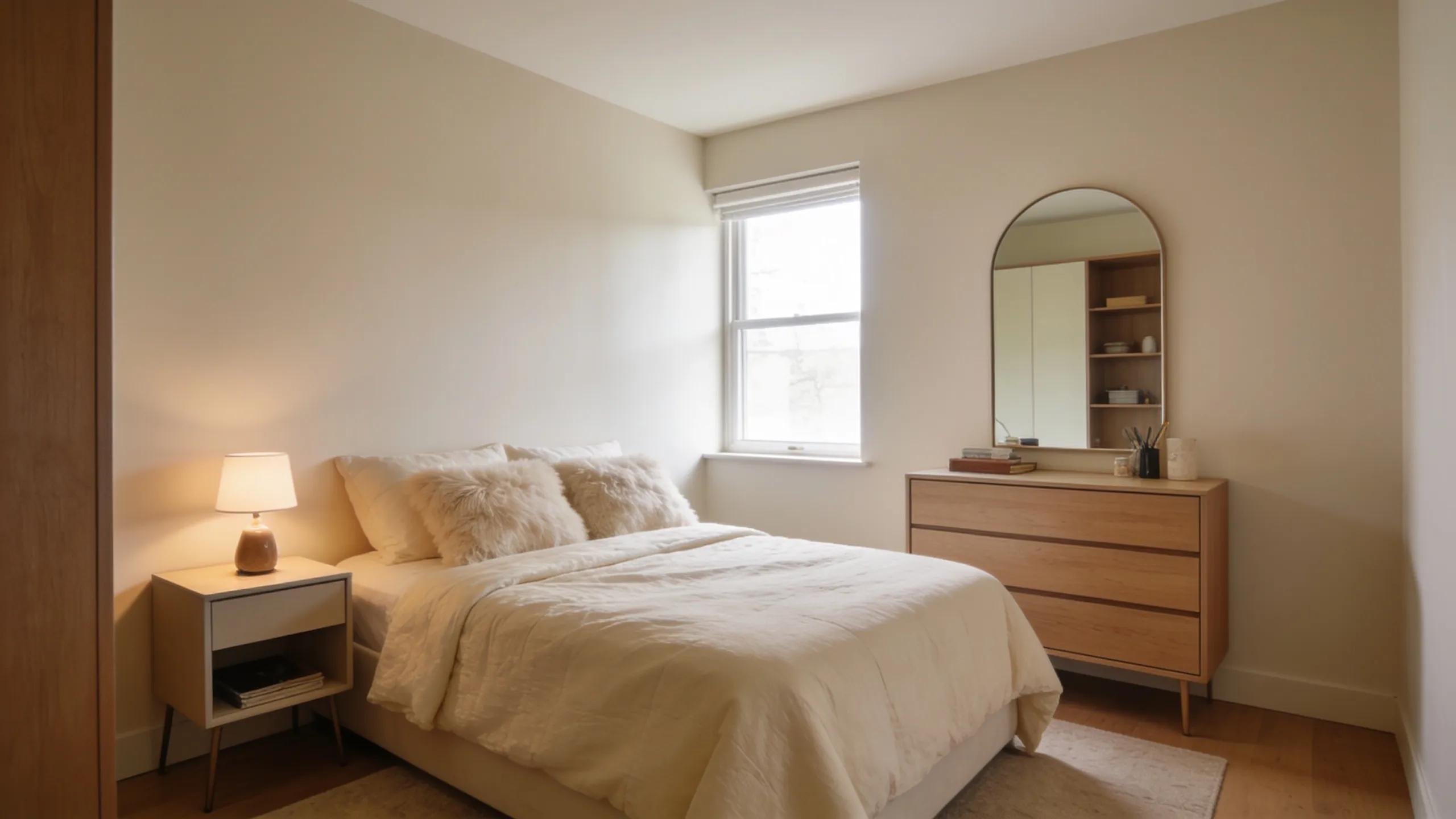
Arranging furniture in a small bedroom poses unique challenges that require thoughtful design and “strategic planning”. Small spaces can quickly become cluttered if not organized with care, making it crucial to implement space-saving layouts that maximize functionality while enhancing aesthetic appeal. In this article, we’ll explore effective techniques on how to arrange furniture in a small bedroom, including seven practical layouts tailored for limited spaces. By addressing common challenges and offering smart solutions, this guide aims to empower you to create a comfortable and stylish sanctuary. We will discuss diverse layout strategies, innovative storage solutions, and design tips that can make a compact bedroom feel more spacious.
What Are the Key Challenges in Small Bedroom Furniture Arrangement?
The arrangement of furniture in small bedrooms often faces several critical hurdles. Limited space exacerbates clutter, leaving little room for essential pieces without compromising movement. When furniture does not fit well within the given area, it can obstruct pathways and create a chaotic atmosphere. Moreover, the balance between functionality and aesthetics becomes a challenge, as many homeowners need to prioritize practicality while achieving a pleasant style.
To mitigate these difficulties, a clear understanding of the “space dimensions” is essential. Prioritizing multifunctional furniture that serves dual purposes can also mitigate the limitations of a small bedroom. With strategic planning, it’s possible to overcome these challenges and create an inviting and efficient living space.
What Are 7 Effective Space-Saving Furniture Layouts for Small Bedrooms?
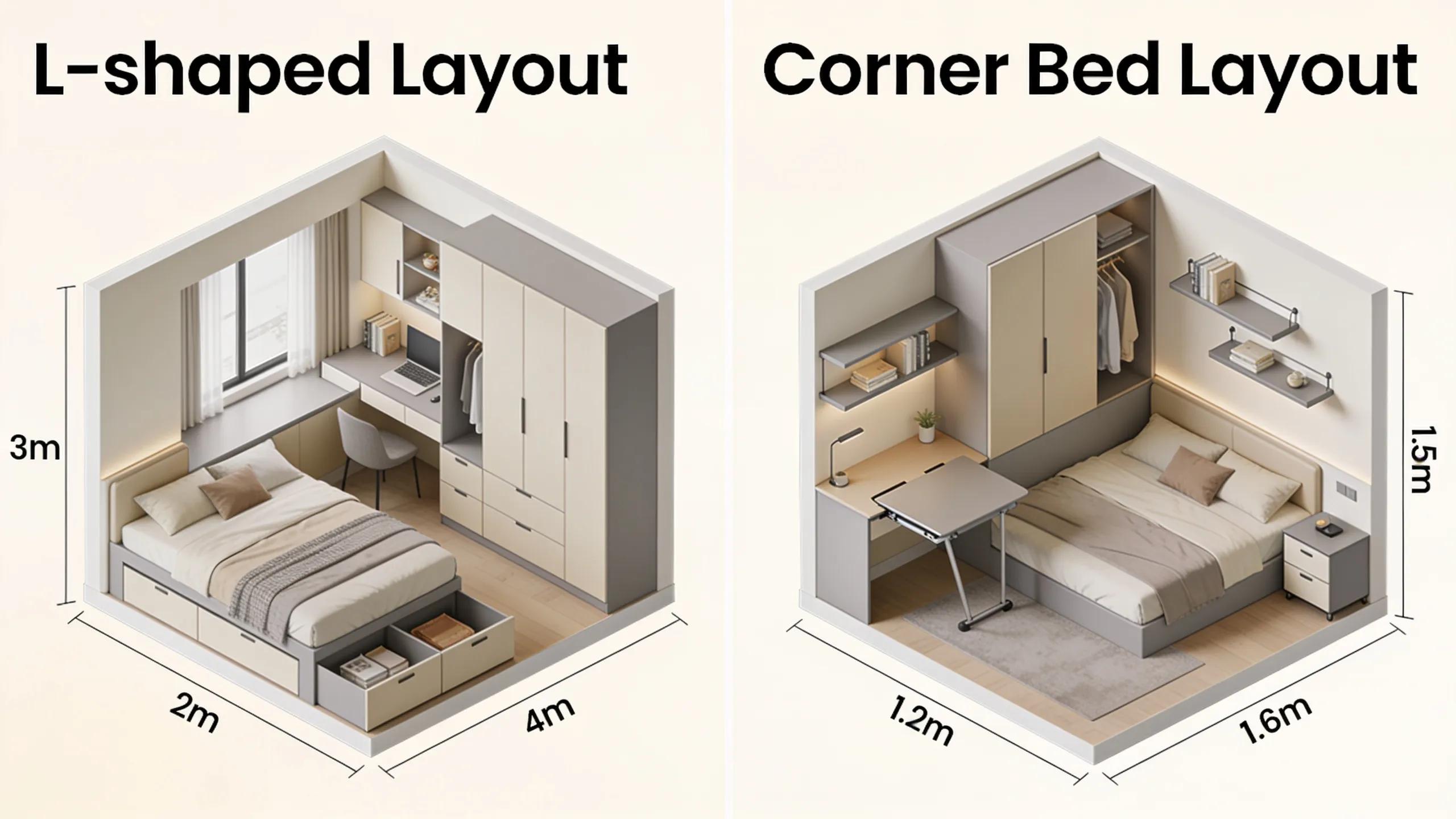
Designing a small bedroom effectively often hinges on the layout chosen. Here are seven layouts that optimize space while maintaining functionality:
- The L-Shaped Layout: Positioning the bed against one wall while placing a dresser or nightstand on the adjacent wall allows for an open floor space. This layout is ideal for maximizing corner areas.
- The Corner Bed Layout: Placing the bed in a corner optimizes wall space and can make the room feel larger. Utilize wall-mounted shelves above the bed for added storage without taking up floor space.
- The Murphy Bed Layout: A wall bed that folds away when not in use frees up additional space during the day, enabling multifunctional use of the room.
- The Floating Bed Layout: By placing the bed on a platform and supporting it with open shelves underneath, you create an illusion of space while providing extra storage.
- The Diagonal Orientation: Positioning the bed diagonally can create visual interest and make the room feel less cramped, while also allowing more light to enter.
- The Multi-Use Furniture Layout: Using a daybed that serves as both a bed and a sofa, complemented with a desk that can be folded away when not in use, maximizes the room’s functionality.
- The Wall Bed with Desk Layout: A wall bed that incorporates a foldable desk unit offers a seamless transition from sleeping area to work space while maintaining an organized look.
Integrating multifunctional choices and optimizing available layouts can significantly enhance the usability and style of small bedrooms. For additional guidance and inspiration in selecting furniture for these layouts, you may want to explore options from Information Hub, which specializes in design solutions.
How Can Storage Solutions and Vertical Space Improve Small Bedroom Organization?
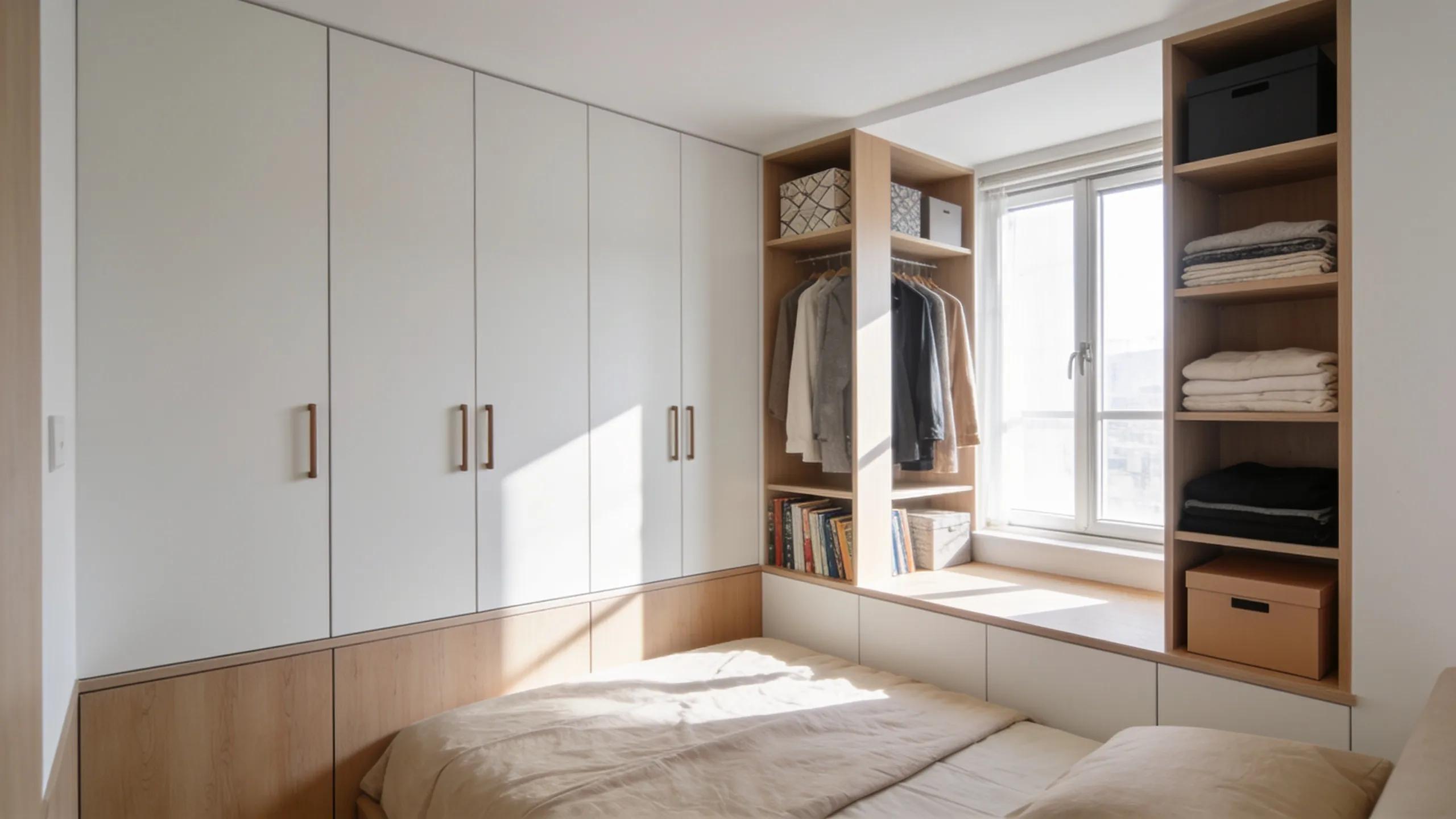
Storage solutions and vertical space optimization are vital components in maintaining an organized small bedroom. By utilizing built-in cabinets and vertical shelving, you can maximize wall space effectively. Shelving units can serve dual purposes, such as book storage and decorative display, while also keeping the room organized and free of clutter.
Incorporating wall-mounted hooks can keep everyday items off the floor, allowing for easy accessibility. Furthermore, under-bed storage provides hidden compartments for seasonal items, further decluttering your space. By prioritizing functional storage solutions, a small bedroom can maintain an organized, airy atmosphere without sacrificing style or comfort.
Built-in Cabinets: Customizable and Space-Saving
Built-in cabinets offer a customizable option that seamlessly integrates into your bedroom’s existing architecture. These solutions can save valuable floor space while providing ample storage to keep items out of sight.
Wall-Mounted Hooks: Keeping Items Off the Floor
Wall-mounted hooks serve as a simple yet effective way to keep clothes, bags, and accessories off the floor, minimizing clutter. This strategic addition can greatly enhance accessibility and contribute to an organized environment.
Which Bedroom Design Tips and Styles Best Complement Small Space Layouts?
Design principles play a crucial role in enhancing the ambiance of a small bedroom. Color psychology, for instance, can influence how spacious or cozy a room feels. Light, cool colors often create an open and airy atmosphere, while darker hues can compress the visual space.
Opting for a monochromatic design scheme helps create a cohesive look, further tricking the eye into perceiving depth. Additionally, implementing design styles that emphasize minimalism can significantly improve the room’s functionality without overwhelming it with décor.
What Color Schemes Create a Spacious Bedroom Ambiance?
To achieve a spacious ambiance, consider using light color schemes such as soft whites, pastel shades, or gentle grays. These colors bounce light around the room, contributing to an elegant and airy feel.
Accent colors can add warmth and character without weight, maintaining the overall lightness of the space. For example, pairing light walls with a single darker accent piece can create focal points without making the room feel cramped.